

Here’s how it went down….
I was shocked awake at 11:45 PM to a pounding on the door and voices calling my name. They sounded like they were coming from inside my house.
I staggered downstairs, still doing up my pants as I rounded the corner. Three cops were standing in my front entrance. I remember thinking I should do a better job of locking the door in the future.
I recognized them because my first wife, Cindy was a cop. Her boss told me that I probably wanted to sit down and guided me to the couch.
"Brother, there’s no good way to tell you this. Cindy’s dead.”
“What happened?”
“Suicide.”
A few minutes later, after a round of “I’m sorry”, they were gone.
It was just me, my sleeping daughters, and some very kind older ladies from Victims Services staring at me awkwardly and offering pamphlets. I asked them to leave a few minutes later.
After Cindy’s funeral, the only interactions I had with the Ontario Provincial Police were from administrative staff. There was no shortage of forms to fill out, after all. Once those were done, we were done.
Oh wait, that’s not entirely true. Five years later, after discovering her work bag in the back of a closet, they were nice enough to return it to me.
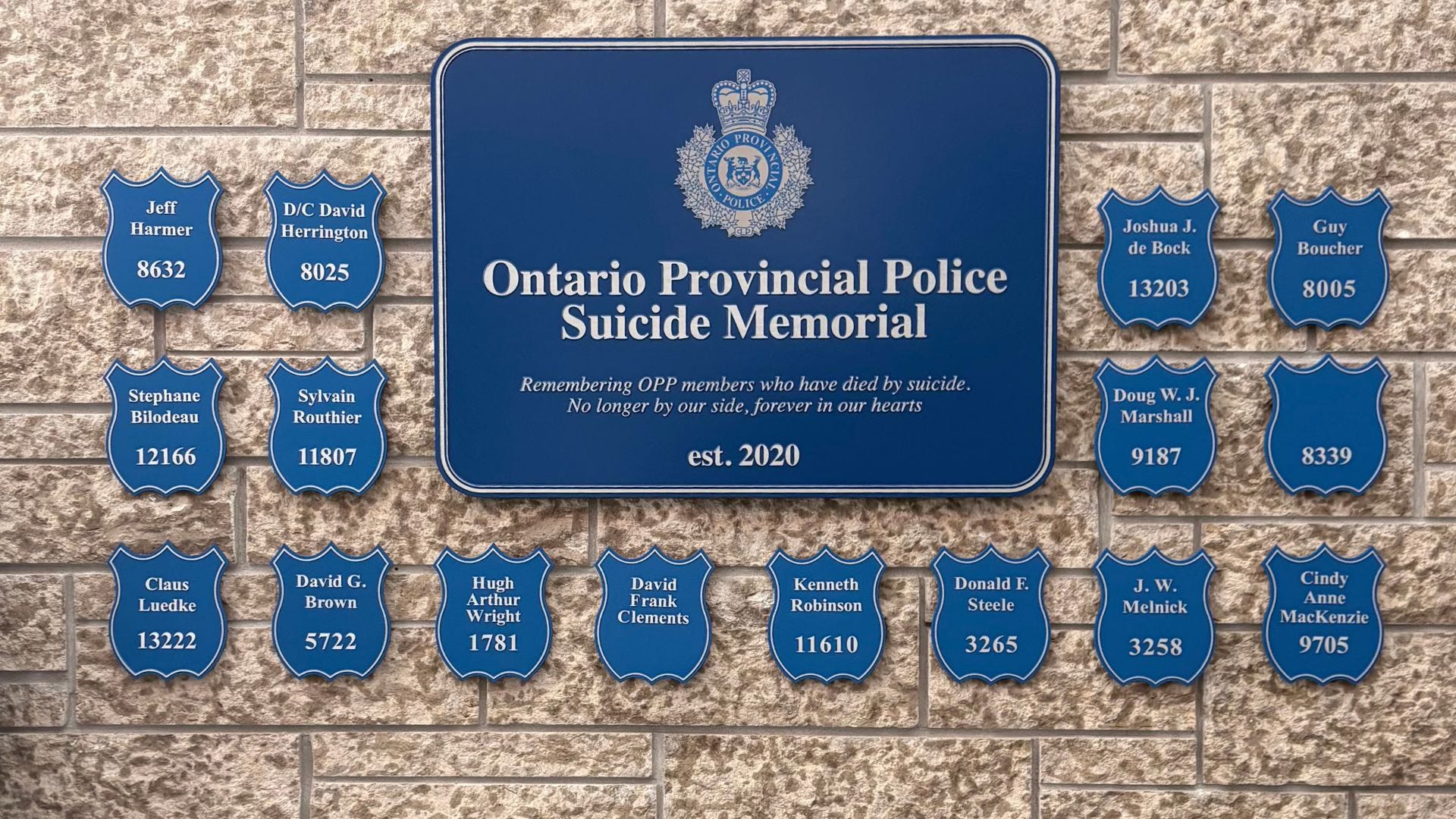
Fast forward fifteen years and it seems things might be finally changing. Cindy was honoured in a meaningful and emotional ceremony on the OPP Suicide Memorial in late 2025. And I noticed something else I’d long since given up on. The senior leaders there seemed to care.
A few weeks ago, I received a note from the manager of their workplace wellness programs. He told me the current Commissioner of the OPP asked that I provide input for the Line of Duty Death project team. The LODD project focuses on ensuring comprehensive support, coordination, and resources for families and members affected by a line-of-duty death, while also strengthening internal processes to provide timely and compassionate assistance.
I said yes.
It’s not because I think participating will fix what happened to my family. My daughter is dead, largely due to her mother’s suicide. Nothing can fix that.
I’m also not interested in relitigating the past. I’m interested in learning from it.
I want to help the organization and the families who make it up move forward. I want to help make the future better than the past.
After a line of duty death, the problem isn’t only grief. It’s that the world the family was living in no longer works the same way.
When humanity is needed most, bureaucracy takes over. Processes are initiated. I’s are dotted and T’s are crossed. Tasks are completed. The most important thing is that the case is closed.
Meanwhile, the family is left living with wounds that no process can close.
Most systems are built for people who are functioning normally. Death upends that. It changes what people can handle, how they think, and how much energy basic things take.
Yet the system assumes families are capable of exactly what they are not. They can’t remember complex information or chase down follow-ups when something stalls. Someone who can barely get out of bed in the morning is not going to advocate for themselves when something doesn’t feel right.
So they suffer in silence. They wonder what happened to the organization that told their loved one they were part of a family when they joined. They stare at the wall, trying to understand why no one seems to care.
And eventually, they give up. Not because they stop needing help. But because they stop believing anyone is paying attention.
I’m going to tell them something else too.
It’s hard to receive support from someone you don’t fully trust. For many grieving families, the organization does not arrive as a neutral presence.
It arrives burdened by history. Too often that history includes years of harm, injury, and feeling expendable. In many cases, it also arrives after the loss of a person who was already broken by the job.
They were taught as a fresh-faced recruit that policing was not something they did. It was who they were. That identity was reinforced again and again. In training. In culture. In loyalty tests.
And then, when they could no longer perform. When the injuries accumulated. When the stress took its toll. They were sidelined, marginalized, or unceremoniously pushed out.
They lost a hell of a lot more than their role. They lost their sense of who they were and why they mattered. They didn’t bear that cross alone. Their family carried it too.
By the time death comes, the damage has often already been done.
In my case, when Cindy died, I thought I wanted nothing from the OPP. I didn’t want their support. I didn’t want their calls. I didn’t want to hear their name again.
But fifteen years later, when I found out she was being honoured, I cried in a way that showed me how much I had been holding in.
The OPP didn’t disappear after Cindy died. But whatever was left of relationship did.
What remained was efficient, professional, and transactional, and inhuman. That structure communicated something, whether it was meant to or not.
It told me that this part is over.
That’s what I want them to see.
Completion closes tasks. Families need continuity.
Continuity does not mean constant attention. It does not mean endless involvement or impossible promises.
After a devastating loss, people already feel like the world has moved on without them. When the system does the same, it doesn’t just end support. It confirms that fear.
Peer connection matters. Because hearing “I’m here with you” from someone who has lived it means more than anything written in a binder ever will.
Some information makes sense later. Not in the first days and weeks, when nothing makes sense.
A single point of human continuity can matter more than a dozen well-designed processes.
Here’s what it’s like to hear your loved one is dead. Not in clinical terms, but in human terms. It’s like being hit with a taser. Everything locks up. Your body stops cooperating. Time stands still. Your vocabulary is reduced to, “Oh God. Oh God. Oh God.”
You’re no longer capable of functioning the way the system assumes you are. And yet that is the exact moment we begin handing people information, decisions, and responsibility.
One principle matters more than all the rest:
Continuity over completion
And I’ll ask them to consider one question every time they design something new.
Are we choosing continuity or are we choosing completion?
I don’t know what they’ll do with that.
But this isn’t about helping one family feel less abandoned. That’s not nearly good enough.
It’s about making abandonment impossible by design.
Beautifully said.
I appreciate your courage in sharing such intimate personal stories, Jason. They are so important.