

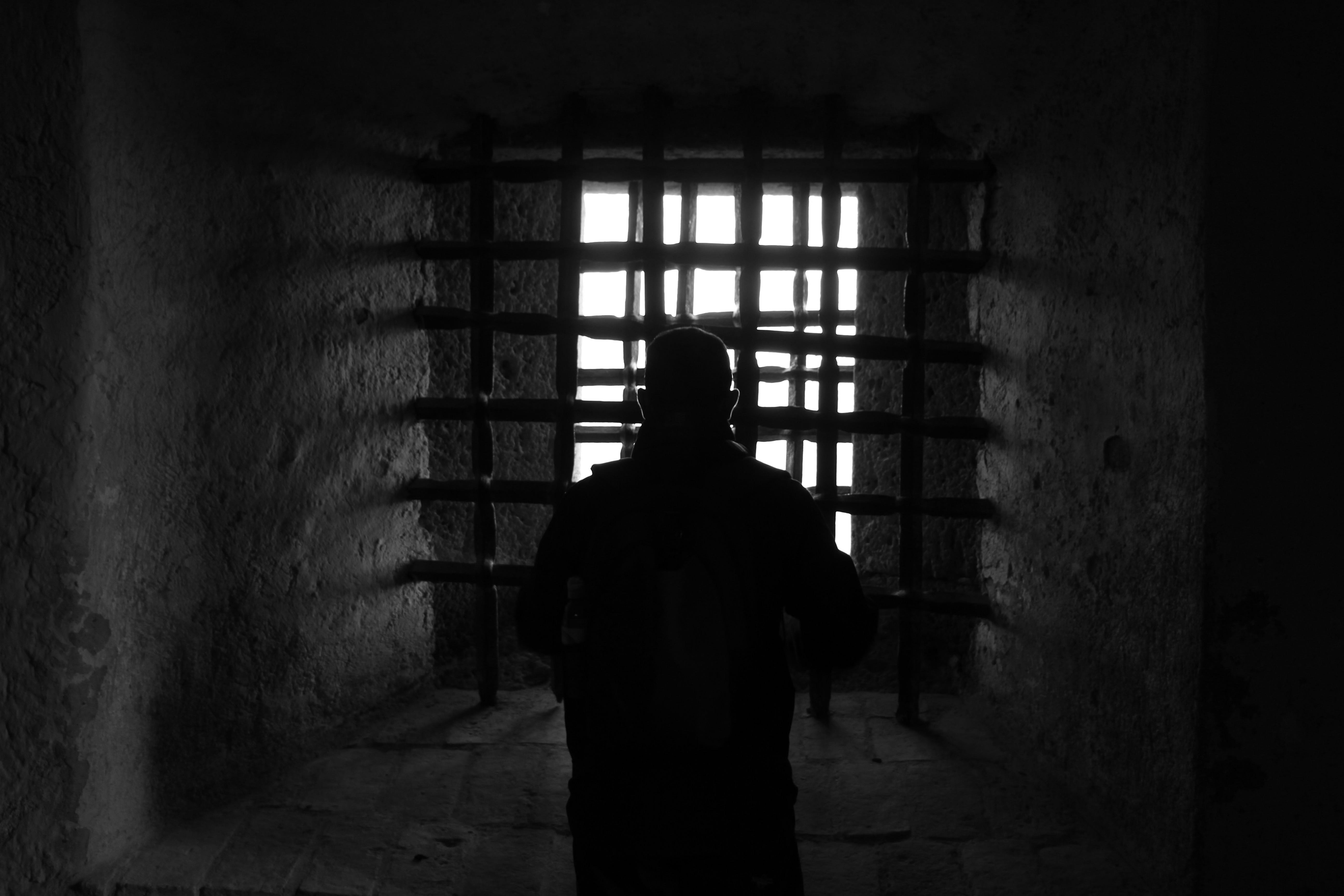
Photo by Eleni Afiontzi on Unsplash
Grief is the long, complex and painful process of adapting to a loss that upends everything. You don’t think the same things. You don’t feel the same things. And you can’t do the same things.
You feel like a different, lesser human being whose life has been frozen at the time of death. You can’t move forward and you might not even want to. Moving forward seems like leaving them behind. Every option feels like hell so you might as well choose the one that keeps you closest to the person who died.
The problem is that you’re no longer really living and you’re hurting the people who didn’t die.
Something is terribly wrong and you know it. You can’t name it and you’re not sure you want to. But it’s there. It’s everywhere. You’re isolating yourself from your family and friends, because it’s better than dumping your shit on them. You’re driving around for a half hour rather than coming straight home from work. You’re numbing your pain with all kinds of things that you know are making it worse.
Most men don’t call that grief. They call it stress or being busy. More often than not, they knuckle down and call it nothing at all.
But here’s what’s actually happening. The part that’s really keeping you stuck didn’t start with the loss.
It started long before.
Present & Absent All At Once
Here’s what most people get wrong about a man after a devastating loss. They see how hard he is to reach and think he’s checked out or doesn’t care. They might even think he’s move on much more easily than should be possible.
Usually, they’re not true. He’s protecting himself. He’s trapped in something he can’t see clearly enough to escape.
Picture a guy who’d never miss his son’s football games. Now he hardly shows up at all. It’s not because he doesn’t love his son. He loves him more than life itself.
But since the loss of his daughter a few years ago, he’s barely holding it together. It’s taking everything he’s got to keep a lid on the explosive emotions that are eating him alive. He’s terrified that if he shows up to the games, he’ll fall apart in public while he’s surrounded by other families. And if that happens, he’ll humiliate himself and his son.
That man isn’t checked out. He’s protecting himself.
And if you’re honest, you know exactly what that feels like.
Maybe it’s not football games. Maybe it’s the one-word answers you give your wife when you can see her reaching out. You know you’re failing her but you’re terrified that if you open up, you’ll fall into a pit you’ll never be able to climb out of. That if that happens, you’ll be responsible for destroying what’s left of your family.
Your behaviour makes complete sense once you look deeper and see what it’s protecting.
The problem is the price. The same walls keeping you from falling apart are also keeping you from the people and responsibilities that give your life meaning. You’ve got the brake jammed to the floor at exactly the moment you most need to move.
Facts Written in Blood
Underneath every protective behaviour is a worry. And underneath every worry is an assumption that justifies it. It feels less like an opinion and more like a fact written in blood. You see it as an obvious truth about how the world works, what people are like, and what you deserve.
Your assumptions might look like this:
If my kids see how broken I am, they’ll stop feeling safe with me. And I’ll have failed them in a way I can’t undo.
If I let people in before I’m ready, I’ll say something that damages those relationships permanently.
If I allow myself to feel better, it means I’m leaving her behind.
Take a second with those. Do any of them sound familiar?
If they do, it isn’t because you’re weak or damaged. It’s because you’re human. Belief systems act like a filter on reality. Your brain uses prior assumptions, values and expectations to make sense of the world because there’s far too much going on to evaluate everything from scratch. Those belief systems don’t just help you navigate reality. They distort it.
And here’s the question worth sitting with: where did those beliefs come from in the first place?
The Operating System Older Than the Loss
The loss didn’t create them. It cranked up the volume on them.
Almost none of the beliefs driving your life started with the loss. They were already there, shaping how you moved through the world, long before any of this happened.
You already knew what men are supposed to do when things get hard. You’re weak if you show people the emotions you’re feeling, or even acknowledge them to yourself. You owe the people you love strength because they’re depending on you. If you break, everything breaks.
They didn’t start with the loss. They’ve been passed down through generations. They’ve been reinforced by the men you’ve modelled yourself after. They’ve always been a part of you. They were just waiting for something big enough to bring them fully to the surface.
Your loss was that thing.
Which means this isn’t just about grief. It’s about a decades-old story you’ve been telling yourself about what you’re allowed to feel, who you’re allowed to be, and what moving forward is going to cost you.
And here’s what that means:
You can’t grieve your way out of your belief system.
You’re not just carrying the loss. You’re running an operating system that makes carrying your loss unbearably hard. That system was installed long before they died.
The grief work and the belief work are not the same work.
Finally Seeing it Clearly
Most men who do eventually ask for help focus on the loss itself. Talking through and processing it matters. But for a lot of men it isn’t enough because the loss is only part of what’s keeping them stuck.
What actually moves the needle is being able to see the full pattern in front of you. When it’s laid out clearly, you get past “I’m isolating myself.” You can see what you’re doing, what you’re afraid will happen if you stop, and what belief underneath it you’ve been treating like a fact for twenty years.
Something important starts to change when you can see that map. Not because the grief disappears. You’ll carry it in one form or another for the rest of your life, and that’s the truth nobody tells you. But grief that’s running your life and grief that’s simply part of your life are two very different things.
What changes is that you can finally see that you’re not broken.
You’re protecting yourself from your worst fears coming true. That protection made sense at one point in your life. It may have been the only option you had. But you’re not that same person anymore and those beliefs can be examined, questioned and released.
Instead of them having a grip on you, you can have a grip on them.
That’s the moment men describe when they talk about feeling the earth shift under their feet. It’s not the grief magically lifting. It’s seeing, for the first time, that what was keeping them stuck wasn’t the loss itself.
It was an old belief system that the loss turned all the way up.
And that’s something you can actually work with.
This is Personal
I lived this pattern for years after my first wife’s suicide. I drank every day for almost five years after her death. I was harming myself and harming my family and couldn’t admit it to myself.
I didn’t realize I was drinking to avoid the pain I needed to face. I didn’t know I was in pain. I thought I’d put her death behind me. But I couldn’t stop drinking, no matter how much it was costing me.
I couldn’t imagine a life that wasn’t worse without booze. I wouldn’t be able to socialize with people unless I was half in the bag. People wouldn’t even like the sober Jay. And if I told my wife I needed help, she’d know I was lying to her all those years when I said I had everything under control.
Then I stopped. And the complete opposite of all those beliefs came true. I remember walking the dog, thinking, “I completely made up every one of those beliefs and they kept me in prison for years.”
That’s the moment. Not when the grief lifted. When I finally saw what was underneath it.
I’ve heard almost every man who does this work describe a version of that same walk. They’ve experienced a different loss, hold different beliefs and are stuck in a different prison. They all have the same realization and almost always say the same thing at the end:
I didn’t realize how much of this was already there before the loss. It’s been running my life for as long as I can remember.
The grief is real and so is the love behind it. But the beliefs that they had to carry it alone, that showing it would cost them something, that moving forward meant leaving someone behind were more ancient than the loss.
If you’re reading this and something about it feels true, I’m building something for you.
It’s a focused process that helps you build exactly the kind of map this piece describes. It’s not therapy or a support group. Its a structured way to get clear on what’s actually keeping you stuck. You’ll uncover the patterns, the protection, and the beliefs underneath it all.
It’s almost ready. If you want to know when the door opens, raise your hand.
Send me a message
Or drop a comment and I’ll make sure you’re the first to hear about it.
Jason, thank you for sharing such a tender piece with such raw honesty and courage. The vulnerability in your words is deeply moving. Your reflection may have been written through the lens of men’s grief, but I found what you described speaks to something profoundly human, and applied to both men and women.
As a grieving mother, your words resonated with me deeply, and made me feel a little less alone in the ocean of grief.
Yesterday, I heard a line on a podcast that has stayed with me: “Your trauma is not the loss or the event itself; your trauma is your response to the event.” And I think your reflection captured that essence. It is your response to the loss, the belief system we build in order to protect our hearts and those we love.
Thanks again, my friend, for sharing this incredible piece from your heart.
❤️ 🙏
You couldn’t be more spot one , we are worlds apart with our grief for our son