

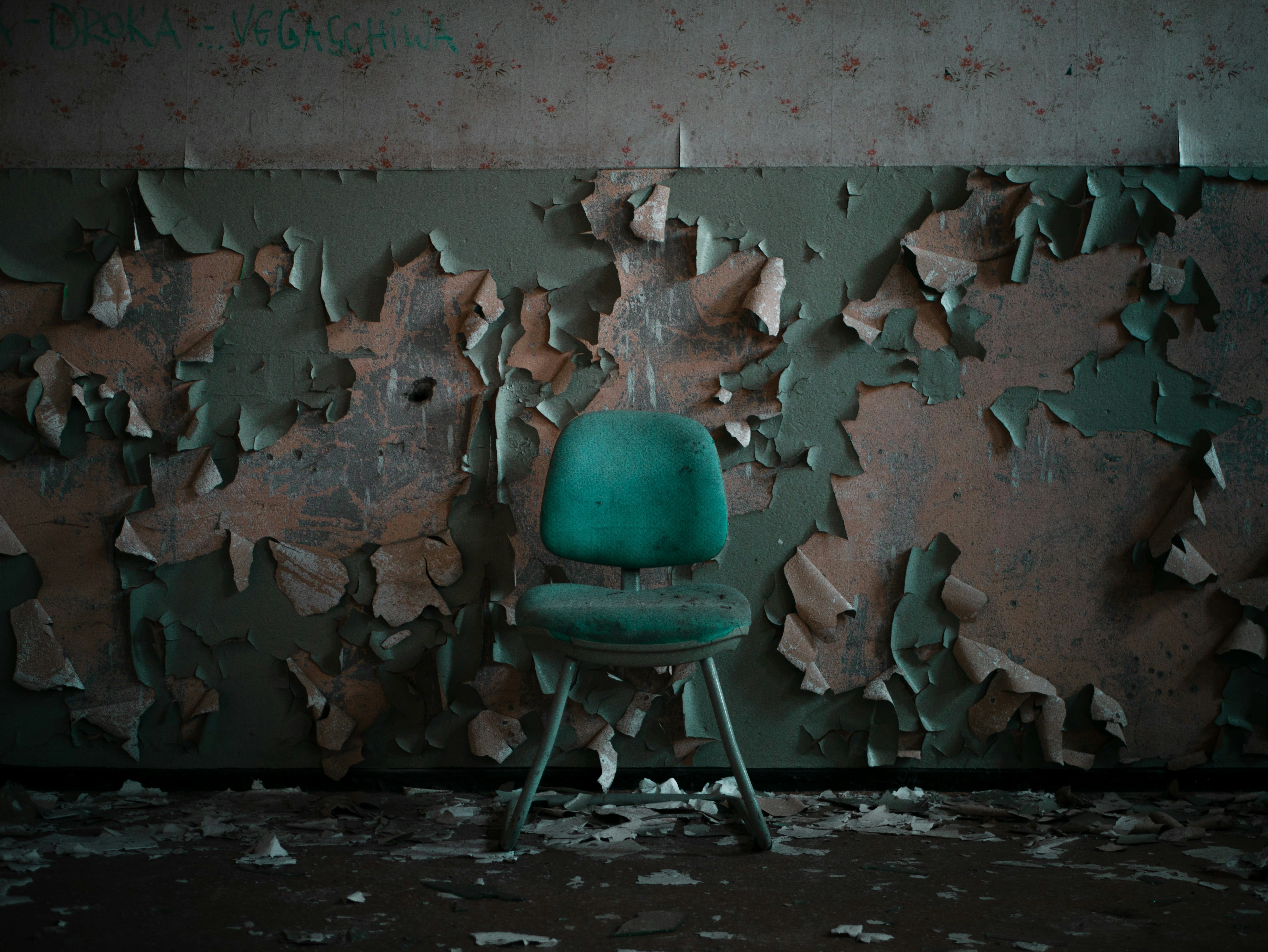
Photo by Julius Drost on Unsplash
One of the most difficult, misunderstood and unseen effects of loss is how much it kneecaps a person’s tolerance. For everything. What used to feel manageable, or even enjoyable becomes like crawling uphill through a mudslide that’s trying to drown you as it drags you down to the valley bottom.
From the inside it can look like this:
The quiet conversations in a coffee shop are like a chainsaw screaming in your head. Regular work demands drive you to want to quit your job, sell everything, and disappear into the woods. The only thing that stops you is you know that would drive you nuts too. You find yourself fantasizing about a world where the standard uniform is a potato sack, if only to avoid spending what little energy you have left choosing a shirt in the morning.
Life might look largely the same on the outside as they fight valiantly to maintain the appearance of having their shit together. But every invisible demon they wrestle takes a toll on their mind, body and soul. Their strength is siphoned, one previously normal moment at a time.
Something fundamental has changed, and most of us are still expecting ourselves to function as if it hasn’t. We rarely recognize it for what it is. Instead, we explain it away as personal failure: burnout, fragility, impatience, a lack of resilience. People start wondering why they can’t handle what they used to, why small things feel monstrous, why their reactions seem out of proportion and uncontrollable.
Every difficult moment is labelled as a step backward into the hell we’re trying to escape. The conclusion is as understandable as it is dead wrong: something is wrong with me. The self-judgment is easier to believe than it is to understand and admit how much your loss has upended your former life. The one you want back more than anything.
I’ve seen this play out in my life in countless, unpredictable ways. One that stands out is a party I attended with my wife at our next-door neighbours’ house. They’re the kindest, gentlest women in their early sixties you could ever hope to meet. They’re earthy and weird in the most charming ways.
They opened their home to about twenty-five people. The music was soft, the energy gentle, nothing even remotely loud.
Meanwhile, the walls were closing in on me. The music was pounding in my ears, and I was pretending to have a conversation while fighting the urge to run home and hide under my covers. The fight didn’t last long. A few minutes later, I stood at the window of my second-floor bedroom, trapped like Rapunzel without the hair, watching people enjoy themselves next door. Loser is not strong enough a word for how I felt.
That moment wasn’t unique. It was one of the first where I understood how deeply I’d been affected by the loss of my daughter.
I understand better now that there was, and is nothing wrong with me. Although I still have to remind myself. And in the hardest moments, I need to be reminded.
These moments aren’t harder in any objective sense. They’re harder because my capacity to stay present without spiralling in ordinary situations has changed. It’s not a failure of will. It’s information. Loss changes how much the system can safely manage at once, even when our fake smiles and “I’m fines” look the same from the outside.
And once I could see it in myself, I started to see it everywhere else.
In the parents who tell me their patience has been railroaded by a hair-trigger temper. In the employees, leaders and business owners who no longer care about what they used to be passionate about. In the relationships that dissolved because maintaining them took more than people had to give. In the dread of knowing life will throw you another curveball you’re sure you can’t handle.
From the outside, nothing about these situations looks much different. The roles are the same. The expectations haven’t changed. Life, to the people around us, still looks mostly intact. What’s changed is how much it takes to muscle through it. There’s less room for uncertainty, meeting expectations and the incessant demands of other people’s needs.
And, so what?
Kids still need to be raised. Bills still need to be paid. And the pain still needs to be managed. So people turn inward. They push themselves harder. They tell themselves to toughen up and do what needs to be done. They feel weakness oozing from their pores and they convince themselves everyone else does too.
The maelstrom inside their minds blinds them to the simpler, even more unsettling truth: Loss has changed what it takes to live your life. Most of us are still expecting ourselves to show up the way we did before and punishing ourselves when we can’t. It’s a fool’s errand that keeps us stuck in the quicksand of the past.
There’s no fix offered here. Just a more honest way to see what’s going on. Sometimes that’s enough to stop making things harder than they already are.
If you want to explore this further, I’ve written a short guide called The Loss Inside Change.
The first sign is not the sadness.
It is the way a familiar task suddenly feels incorrect in your hands.
You stand in the kitchen, reaching for something you have reached for a thousand times, and your body hesitates. Not because you forgot how. Because the gesture belongs to a version of you that no longer fully exists. The room is the same. The rules are not.
This is how grief enters. Quietly. Without spectacle. It does not shatter the world. It shifts the physics.
Everything still functions, but nothing agrees with you anymore.
We tell ourselves this resistance means we are failing. That if ordinary moments feel heavy, it must be because we are doing grief wrong. Not trying hard enough. Not healing efficiently. Not returning to baseline with the enthusiasm everyone seems to expect.
But weight is not failure. Weight is evidence.
Loss does not empty us. It installs itself. It adds mass. A second skeleton. An internal architecture that was never part of the original design. You do not become lighter by pushing harder against it. You become injured. Or dishonest. Or both.
Effort, in this landscape, stops meaning acceleration. It becomes consent.
Consent to slower movement. Consent to days that do not resolve. Consent to the ache that shows up in neutral places. The grocery store. The sidewalk. The sound of a voice that does nothing wrong and still undoes you.
What we often call resilience is just refusal with better branding. A way of demanding productivity from pain so other people can stay comfortable in our presence. We praise endurance when what we really want is silence. We celebrate strength when what we actually mean is compliance.
Real endurance looks less impressive.
It looks like staying when the instinct is to escape. It looks like letting a day remain uneven without rushing to redeem it. It looks like releasing the belief that meaning must announce itself loudly to count as progress.
Grief is not a puzzle. It is a climate. It alters time. It changes posture. It shortens breath. It makes simple decisions feel expensive. Not because you are weak, but because you are now carrying something that does not set itself down.
Here is the uncomfortable truth we rarely say out loud. Some people do not get better in the way we like to imagine. Some lives become narrower. Quieter. Less efficient. And still, they remain deeply, stubbornly meaningful.
Healing is not the erasure of weight. It is learning how to move without demanding that the body return to a shape it no longer holds.
Eventually, life resumes. Not because the burden lifts. But because you stop requiring its disappearance as proof that you are allowed to live.
Nothing is fixed.
Nothing is conquered.
The world keeps going, and you go with it.
Heavier. Altered. Still here.
And that is not weakness.
That is adaptation.
Thank you for sharing this. Yesterday I tried to return an unwanted Christmas gift to the store. An easy task or so I thought. It took everything I had to hold it together. The gift was finally returned but that was enough for one day and I had to go home. I then got cross with myself as the previous version of me would have managed the situation just fine.