

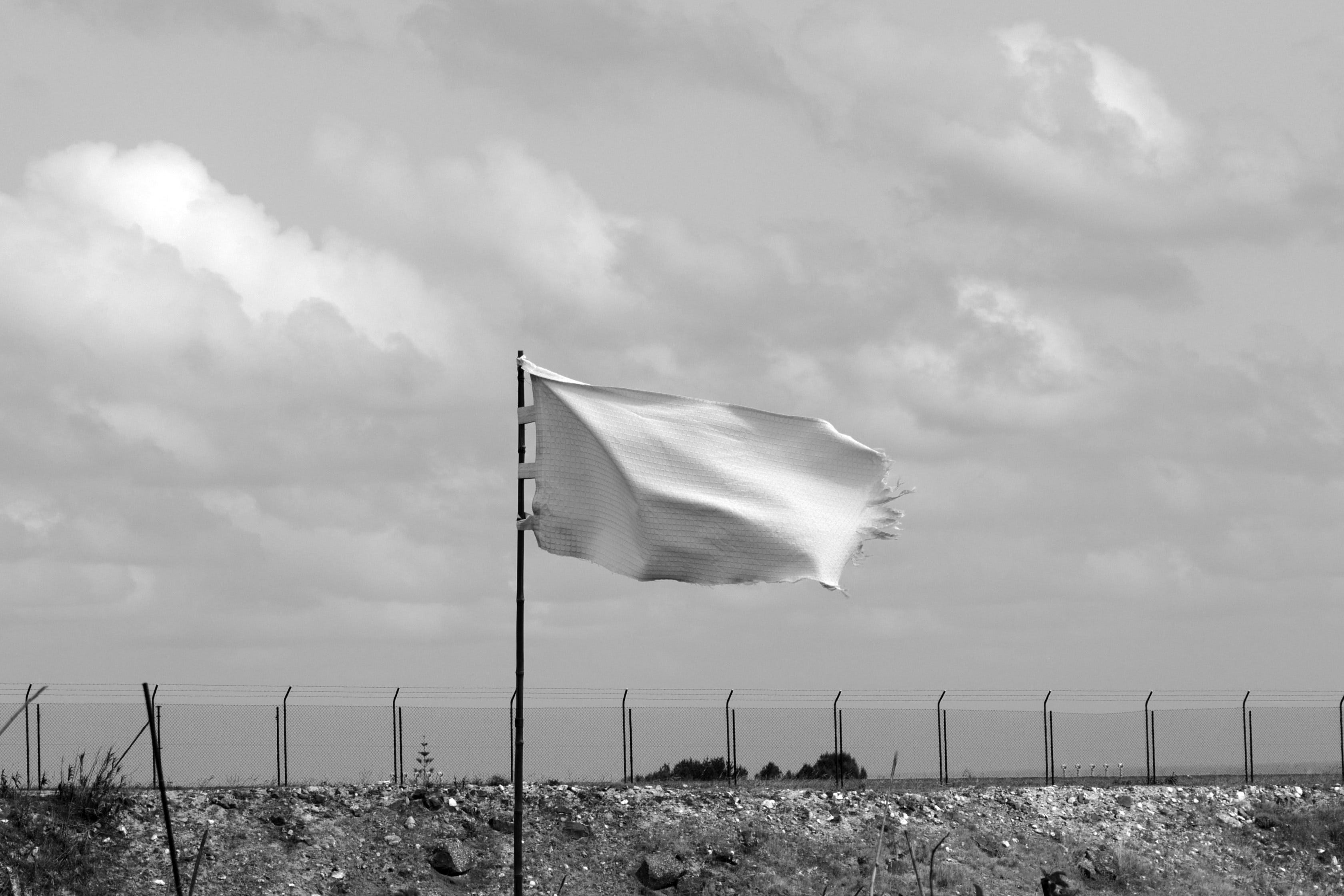
I’ve been scared many times in my life, but I’ve only felt terror a few times.
The first was sitting at the funeral home, outside the room where my daughter’s body lay. Deciding whether to walk through that door felt like being chained to two draft horses pulling in opposite directions. One was dragging me towards my daughter. The other was dragging me anywhere else on Earth.
In the end, I went in. Three and a half years later, I’m not sure if I’m glad I did.
The others happened with my therapist, when he asked me to do something that sounded so damn simple. He didn’t ask me to analyze my thoughts. He specifically asked me not to. Making up stories and navel-gazing are specialties of mine.
Instead, he asked me to drop my attention below my neck and describe what I was feeling in my body.
It was easy, for a few seconds. Within moments I felt intolerable discomfort that told me I was out of control and in danger, and I was desperate to escape.
Breathing hard, I said, “I can’t fucking do this.” I was shocked at the intensity of what’d just happened.
We talked through it. I calmed down and tried again. After a minute or two I started bawling, went upstairs and slept for twelve hours.
The next day, I ruminated endlessly as I tried to make sense of what’d happened. How could trying to get out of my head have been so terrifying?
thought my mind was my greatest asset. I told myself I could mindset myself through anything, including the death of my daughter.
I believed in Positive Psychology, I’d read the Stoics, and I’d written a book on vulnerability.
I had all the tools at my disposal that I didn’t have after my first wife Cindy’s death. I remember thinking Chloe’s death was my rubber-meets-the-road moment. This was the time I’d bring everything I’d learned to bear so I could “win” at grief. I’d completely screwed it up after Cindy’s suicide. This time was going to be different.
Those tools have been indispensable in helping me not destroy myself after such a devastating loss. It turned out they weren’t enough and became another, admittedly less destructive, way of coping with a level of pain that felt unfaceable.
When I felt ripped off and like a victim, I’d force myself to think about being grateful for the time I had with Chloe. Having nineteen years with her is a hell of a lot better than zero.
When I’d obsess about all the mistakes I’d made, and all the red flags I didn’t see, I’d remind myself that I did my damn best. Being a great dad is the most important thing in the world to me and I did everything I knew how to do. Saving my daughter was never fully in my control, so I told myself to let it go.
When I needed to cry, I’d cry, no matter how much I hated it. And I did hate it. I still do.
After a year or so, I ran out of gas. The pain was still there and was growing more intense. Nothing could make it go away for more than a few minutes. I was exhausted, frustrated and could feel the apathy draining my will to keep “winning.”
For the first time in my life, I was worried about my mental health. I felt depressed and started to worry that this was how things would be from now on. I knew I had to find a different way forward and had no idea what to do or how to do it.
In my search, I discovered Somatic Experiencing therapy. I was intrigued but skeptical. The whole idea of learning to be present with what was happening in my body seemed ridiculous, like something only weak-minded people would turn to.
But I knew what I was doing wasn’t working. Even in my darkest moments, I always believed healing was possible. I didn’t know what healing looked like, but I knew I’d turn over every stone on the path to get there.
After two years, I’ve come to better understand what happened in those early sessions. I was using my mind to manage my most difficult experiences. I’d plan, analyze, and challenge myself to think differently. It worked, like a painkiller works. It gave me a measure of relief. So I did it all day every day.
Like a painkiller, it soon stopped working and I’d done nothing to address the source of the pain. It’s still there, and that’s what people mean when they say grief is stored in your body. It sounds mystical and it isn’t.
When something devastating happens, your body does what it was built to do. It floods you with jet fuel so you’re ready to fight or run. You can’t fight a death and you can’t outrun one, so all that fuel pours in and never burns off. Your alarms switch on and never get the signal to switch off. Your mind is always scanning and assessing and never gets a chance to rest.
You find yourself caught in a never-ending cycle. A memory, an anniversary or even a picture of your loved one triggers the pain, and your nervous system reacts and sends you into fight, flight or freeze. Then you react, often without thinking about it, to make the pain go away. You drink, get high, get angry, overwork, or shut down. You end up hurting yourself and the people you love who didn’t die.
It’s exhausting, demoralizing and will destroy you if you don’t break the cycle.
I’ve learned that the only alternative is to face it, and that’s what was so terrifying for me. It meant releasing the illusion of control I was holding onto with a death grip and staying with what was happening in my body. No stories about what it means, no attempt to change anything.
It felt like submission, but turned out to be surrender. They can feel like the same thing on the inside, but they aren’t.
Submission is defeat. Something overpowers you and you feel yourself losing to it. Losing means another terrible thing will happen to you. Every instinct tells you that fighting is your only option. So you fight, and in the end, you lose.
Surrender is different. You lay down your own weapon, in this case your mind, because the weapon is the problem. Stuffing your uncomfortable feelings into a box manufactures the pressure it claims to contain. It’ll burst, over and over again.
You might mistake surrender for resignation or quitting too. Resignation is a forecast about the future: nothing will help, so why try? Quitting is walking away from something that could still be won. Surrender happens in the present tense, with your attention, in the next ten seconds. There’s nothing to win. You’re only facing what is, no matter how uncomfortable it might be.
Surrender is choosing to face your experience, without trying to change it.
I can imagine what you’re thinking, because I thought it too. It probably sounds like being unable to swim and being thrown into the deep end of the pool with no life preserver, one dramatic collapse with no way back. You’ll lose whatever life you have left and you’ll fail the people you’re supposed to protect.
That picture is dead fucking wrong. You touch the edge of the sensation for as little as ten seconds and come back out. Then you do it again the next day, or in two weeks at your next appointment.
In time, what you’ll find is that the pain that feels impossible to escape will pass. When you’re in it, it can feel like it will never end. When you face it, you learn that relief is often a few minutes away. It hits you, it passes and you’re still standing.
It’s in the moments afterwards that you’ll learn the most. Instead of avoiding the pain, you’ll come to understand what it’s about. You’ll cry, and you’ll become bone-tired, but you’ll be less afraid to explore what you’ve been avoiding for so long.
Before all this, I didn’t understand what people meant by being fully present. I thought it was managing not to look at my phone while someone was talking to me. I’d congratulate myself on how present I was when I could work on something for fifteen minutes without getting distracted.
Now I understand that it means surrender. It’s the only way to finally begin to heal. You’ll also develop the capacity to better face everything in your life without reacting in a way that makes everything worse.
This is the hardest work I’ve ever done. But it’s not harder than being a slave to a self-destructive cycle you can’t escape.
All that danger that I was protecting myself from was never real in the first place. There was only my grief, and the certainty that feeling it would hurt me worse than I’d already been hurt.
It didn’t. It’s healing me.
Feeling what’s in your body is a hard place to start. Seeing what you do to avoid it is easier.
My way of avoiding it was my mind, and I couldn’t see it I convinced myself it was strength. You probably can’t see yours either. You might stay busy, hold everything together for everyone else, blow up over small things, or go through the motions while feeling dead inside
The Gut Check will show you how you’re coping with your pain. It’s free, it takes about ten minutes, and it skips the questions about your feelings and asks how you’ve been operating. There’s no judgement. You don’t need an account to take it or to see your results.
If you’re reading this because you love a man who lost someone, there’s a version built for you. It shows you how he’s protecting himself and gives you some ideas on how to get through to him.